Modular Building quotes can be very tricky. Unlike buying a standard off-the-shelf product, every modular building project is different. Your project may involve:
- A single portable office
- Multiple modular welfare buildings
- A phased site accommodation programme
- A fully managed turnkey solution
Because every project has different requirements, suppliers also make different assumptions. Some quotations focus primarily on supplying the building. Others include significant elements of planning, logistics and installation.
Unless those assumptions are clearly explained, it’s almost impossible to compare two quotes on a like-for-like basis.
A lower headline price doesn’t automatically mean lower project costs. It may simply mean that more responsibility, and therefore more commercial risk, has been left with your project team.
What’s Usually Included in a Modular Building Quote?
Every supplier structures quotations differently, but a comprehensive proposal should clearly identify what is included, what is excluded and what has simply been assumed.
| Project Element | What Should Be Clearly Defined |
| Building specification | Size, layout, finishes, configuration, hire or purchase |
| Internal fit-out | Offices, welfare areas, toilets, kitchens, partitions, heating, lighting |
| Technical specification | Drawings, compliance information, product details |
| Delivery | Transport arrangements, delivery dates, access assumptions |
| Installation | Positioning, joining modules, weatherproofing, ramps and steps |
| Handover | Completion process, commissioning and documentation |
| Warranty & aftercare | Guarantees, maintenance support and defect procedures |
The more detail a quotation provides, the easier it becomes to understand exactly what you’re buying.
The Costs That Often Sit Outside the Building
One of the biggest misconceptions about modular buildings is that the building itself represents the majority of the project cost. In reality, many unexpected costs sit around the building rather than inside it. These are often where commercial surprises begin.
Groundworks
Has the supplier included:
- Foundations?
- Base preparation?
- Levelling works?
- Temporary access?
- Or is this expected to be arranged separately?
Utilities
Can the building actually operate once it’s delivered? You should know who is responsible for:
- Electrical connections
- Water supply
- Drainage
- Data and communications
- Security systems
- A completed building isn’t necessarily an operational building.
Delivery & Offloading
Delivery often involves far more than transport. Questions worth asking include:
Is offloading included?
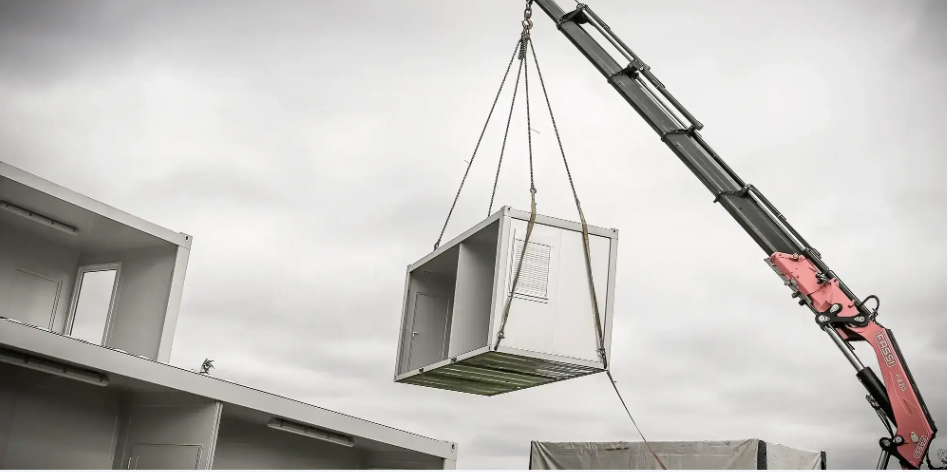
Is crane hire required?
Has site access been assessed?
Are traffic restrictions likely?
Welfare Servicing
If your project includes welfare facilities, have you considered:
- Waste tank servicing?
- Water refilling?
- Cleaning arrangements?
- Ongoing maintenance?
These ongoing operational costs are sometimes overlooked during procurement but become essential once the building is occupied.
Hidden Costs Usually Come from Assumptions
One of the most expensive phrases in construction is: “We assumed that was included.”
Many budget overruns don’t happen because somebody made a poor purchasing decision. They happen because responsibilities weren’t clarified early enough. Some common examples include:
- Delivery restrictions discovered late
- Ground conditions requiring additional work
- Service connections not included
- Additional lifting equipment
- Design changes
- Programme delays caused by incomplete site preparation
- Multiple suppliers working to different assumptions
None of these are unusual. They’re simply areas where scope wasn’t fully defined before approval.
A Simple Quote Completeness Checklist
Before approving any modular building quotation, work through the following questions.
| Question | Why It Matters |
| What’s included? | Prevents assumptions becoming variations |
| What’s excluded? | Highlights additional procurement requirements |
| What’s assumed? | Identifies commercial risk before approval |
| Who owns delivery? | Clarifies accountability |
| Who provides lifting? | Avoids installation delays |
| Who completes groundworks? | Prevents programme disruption |
| Who connects utilities? | Ensures the building can be used immediately |
| What triggers additional costs? | Improves budget certainty |
| What defines practical completion? | Creates clear expectations |
| What support is available after handover? | Reduces long-term operational risk |
If any of these questions can’t be answered confidently, further clarification is usually worthwhile before signing off the project.
Why the Cheapest Quote Can Become the Most Expensive
Imagine you’re reviewing two quotations. Supplier A is 12% cheaper. At first glance, it appears to be the obvious commercial choice.
But after approval you discover:
- Groundworks aren’t included.
- Delivery coordination is your responsibility.
- Crane hire is additional.
- Utility connections sit with another contractor.
- Installation support is limited.
- Handover requirements are unclear.
- Meanwhile, Supplier B included these items from the outset.
The original price difference gradually disappears through additional procurement, variations, management time and programme delays. This is why experienced commercial teams compare scope before price.
Compare Scope, Not Just Cost
Instead of reviewing quotations like this:
| Supplier | Price |
| Supplier A | £ |
| Supplier B | £ |
| Supplier C | £ |
Compare them like this:
| Supplier | Scope | Delivery | Installation Support | Accountability | Price |
| Supplier A | ✓ | ✓ | ✓ | ✓ | £££ |
| Supplier B | Partial | Partial | Limited | Shared | ££ |
| Supplier C | Basic | Basic | Limited | Unclear | £ |
Looking beyond the headline figure often gives you a much clearer picture of overall project value.
Make Better Procurement Decisions
The strongest modular building suppliers don’t simply provide buildings. They help reduce uncertainty. That means being transparent about:
- What’s included
- What’s excluded
- Who is responsible
- Where risks sit
- What happens if the project changes
The easier it is to understand a proposal, the easier it becomes to make a commercially defensible decision.
Ultimately, you’re not just buying a modular building. You’re buying confidence that the project will be delivered with fewer surprises, fewer coordination gaps and greater cost certainty.
A modular building quote is only one piece of the procurement puzzle. Before approving your next project, make sure you understand the wider risks around site readiness, hidden costs, supplier responsibility, delivery coordination and commercial accountability.
Source: https://www.jackson-group.co.uk/resources/whats-included-in-a-modular-building-quote