
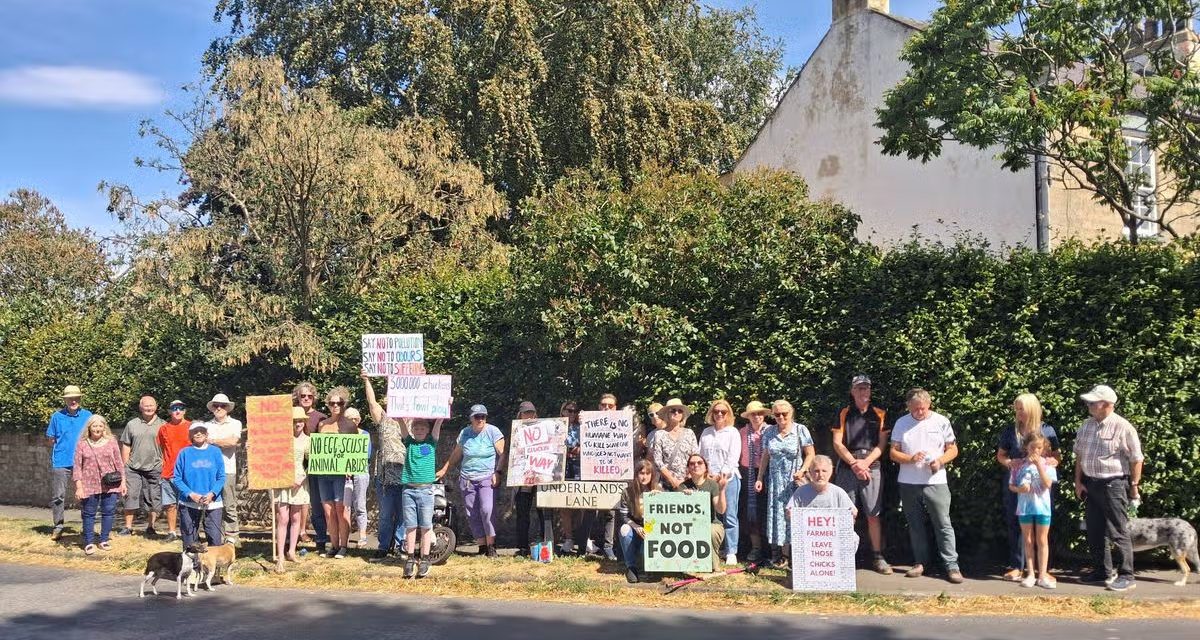
A protest has been held against controversial plans for a poultry facility capable of rearing 2.7 million chickens each year near Ripon in North Yorkshire. Around 30 people took part in the demonstration on Saturday close to the proposed site off Underlands Lane, near Melmerby.
The application, submitted by Forest Poultry Ltd, seeks planning permission to build six poultry units with the capacity to house up to 360,000 birds at any one time. Each building would span 126m by 25m and be equipped with automated feeding, drinking, heating and ventilation systems.
Growing demand for chicken
The plans also include heat exchangers to improve energy efficiency, along with approximately 100kW of roof-mounted solar panels on each structure, reports Yorkshire Live. The applicant argues the development would help meet the UK’s growing demand for chicken, reduce reliance on imports and strengthen food security, describing the scheme as having a “compelling and robust economic justification”.
Despite this, the proposal has attracted more than 430 objections, including those from parish councils and campaign groups. A separate objection coordinated by People for the Ethical Treatment of Animals (PETA) has gathered signatures from 18,000 people.
Those opposed to the plans have raised concerns over odour, noise, air quality, traffic, the impact on the surrounding landscape and animal welfare. In recent weeks, campaigners have also argued that the planning application contains inconsistencies and omits crucial information.
Strong oppostion in North Yorkshire
Ripon resident Brian McHugh, who coordinated Saturday’s demonstration, stated the attendance highlighted the intensity of community sentiment.
“It really feels like this is being pushed through, regardless of what the locals think,” he said. “It really is fantastic to see the turnout from people who want to have their voices heard on the environmental issues, animal welfare issues and planning issues which surround this plan.”
Mr McHugh indicatedthat protesters continued to harbour worries regarding the development’s environmental consequences.
“Background ammonia concentrations already exceed critical levels and this is accepted by the applicant,” he said. “The intrusive smell of 2.7 million chickens is a real concern and hasn’t been fully addressed in the planning documents. People here also have concerns about the pollution of groundwater – which we have seen is a real concern in places where we have these industrial units – for example the River Wye.
“There is a strong narrative being pushed that we need ‘cheap chicken’ with high welfare standards rather than rely on imported chickens, but what appears to be missed is that the claims of a national need for chickens is an industry narrative and is not a government initiative at all.”
North Yorkshire Council will determine the application.